Bare Metal Kubernetes OS for GPU Clouds
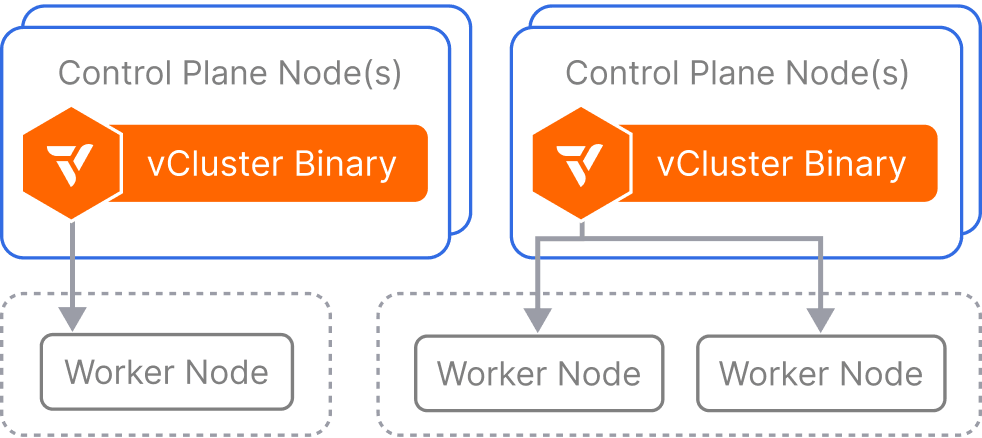
vMetal runs a lightweight Kubernetes binary directly on your hardware, eliminating k3s and kubeadm dependencies so GPU clouds maximize performance without layering complex distributions.
Traditional Kubernetes distributions add layers that cost performance, time, and revenue.
Layering k3s or kubeadm on bare metal hardware introduces unnecessary dependencies that drain GPU performance and slow provisioning cycles.
Building a bare metal Kubernetes OS yourself takes 6 to 10 engineers, 6 to 12 months, and significant capital before a single tenant is live.
Standard Kubernetes forces you to choose between tenant isolation and operational efficiency, leaving GPU workloads exposed or underutilized.
vCluster Standalone runs as a single binary directly on Linux hardware with no external Kubernetes dependency. vMetal adds zero-touch provisioning, GPU lifecycle management, and kernel-native workload isolation so AI cloud providers go from bare metal racks to production Kubernetes in days.
Every layer from hardware provisioning to workload isolation is purpose-built for GPU clouds running directly on bare metal.
vCluster Standalone runs as a single binary on bare metal Linux, replacing k3s, kubeadm, and k0s as the base layer. No intermediate runtime required, no overhead stacked between your hardware and your Kubernetes control plane.

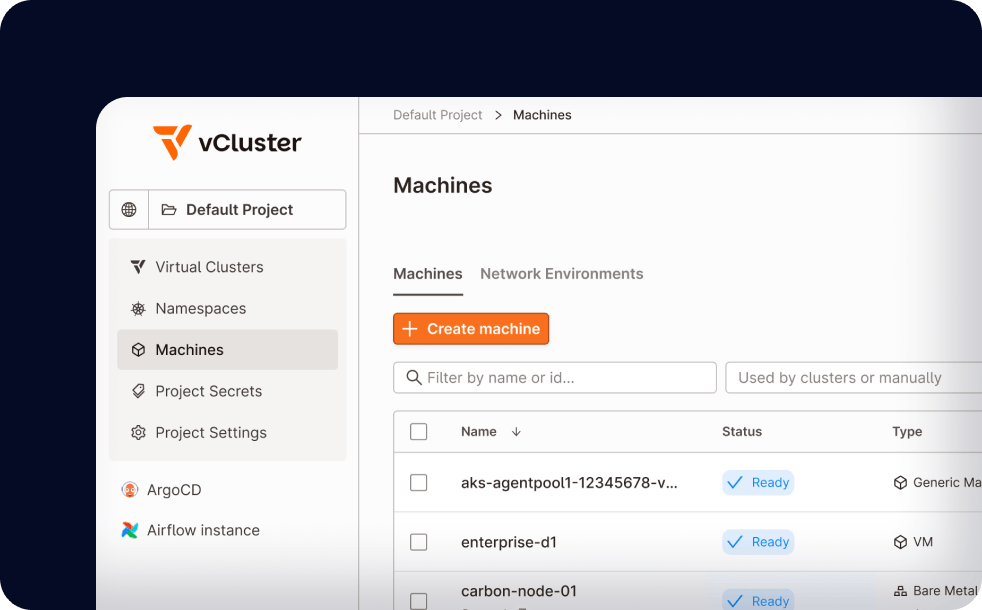
PXE boot, OS installation, machine registration, and network configuration handled automatically. vMetal manages the full GPU server lifecycle from initial rack to decommission, turning hardware into production Kubernetes nodes without manual intervention.

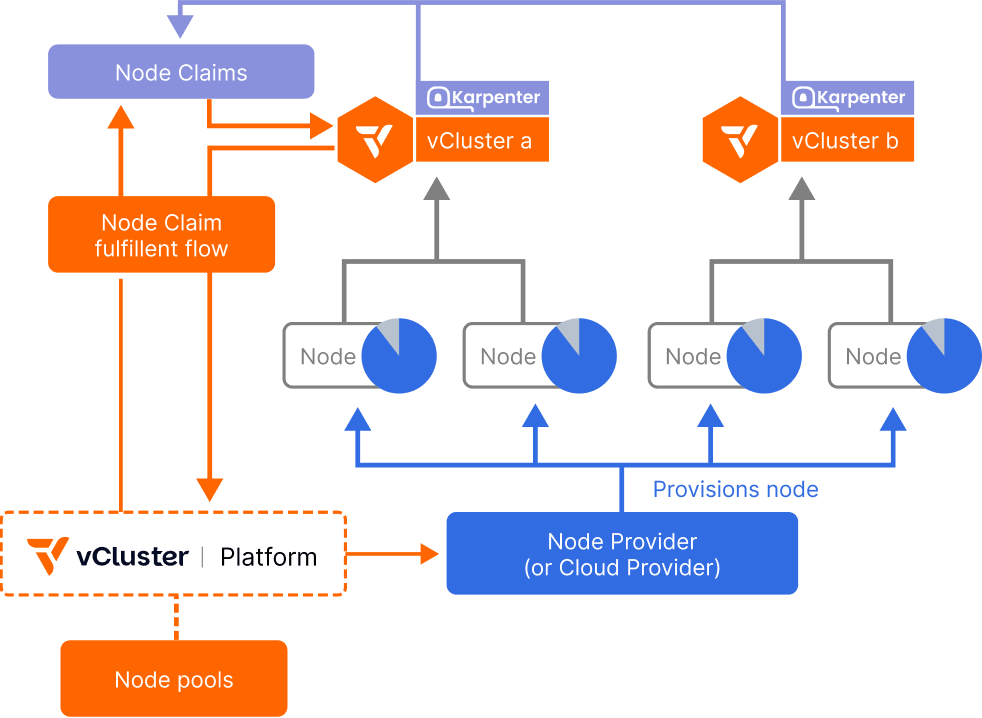
Auto Nodes acts as Bare Metal Karpenter, automatically provisioning GPU servers via Terraform when tenants schedule workloads. Physical nodes scale in response to real demand without manual provisioning queues.

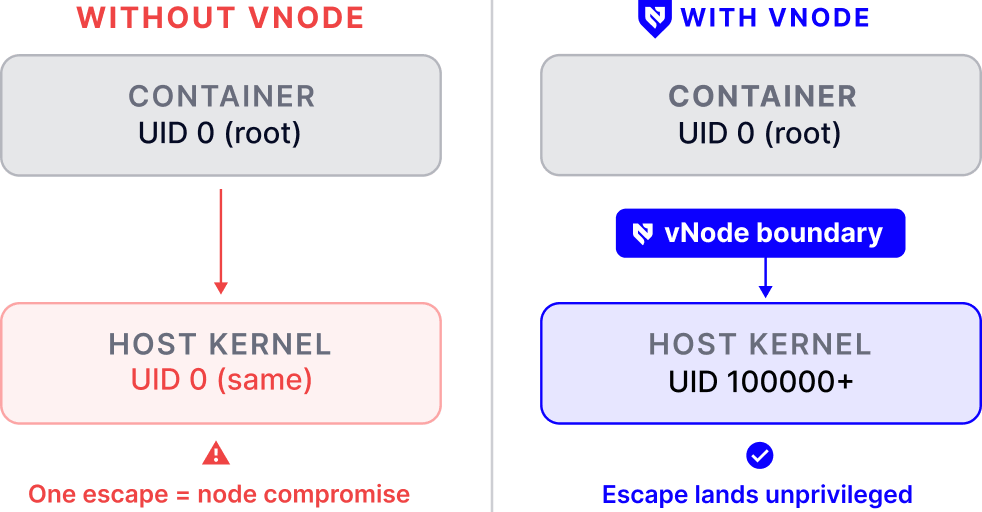
vNode (currently in private beta) provides kernel-native workload isolation using seccomp, cgroups, namespaces, and AppArmor per workload. Tenants run securely on the same bare metal Kubernetes OS with no hypervisor tax and no GPU performance penalty.

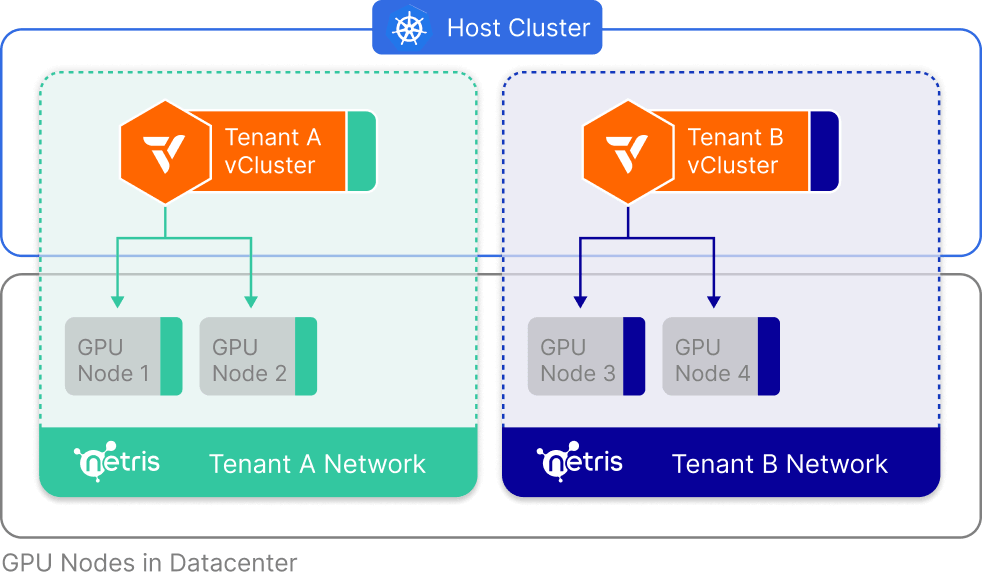
VLANs, VXLANs, VRFs, ACLs, and DPU policies enforce hard network boundaries between tenants sharing the same bare metal Kubernetes infrastructure. Powered by Netris integration for automated network lifecycle management.

This isn’t a side project. Behind every vCluster deployment is 5+ years of deep K8s engineering, security hardening, and battle-tested infrastructure work at massive scale.
Talk to our team about your stack
Deploy vCluster on your infra in minutes
Go live with a hyperscaler-grade tenant experience in days
A bare metal Kubernetes OS runs Kubernetes directly on physical hardware without an intermediate operating system layer or dependency like k3s or kubeadm. vMetal delivers vCluster Standalone as a single binary that runs directly on bare metal Linux, eliminating the need for any external Kubernetes base layer. This reduces overhead, simplifies the software stack, and maximizes available GPU performance for AI cloud providers and data center operators.
No. vCluster Standalone is specifically designed to run as a binary directly on bare metal Linux with no external Kubernetes dependency. It replaces k3s, kubeadm, and k0s as the base layer rather than sitting on top of them. This is the core distinction between vCluster Standalone and conventional Kubernetes distributions, which require an existing host cluster or OS-level Kubernetes runtime before tenant workloads can be scheduled.
vMetal handles the full GPU server lifecycle through zero-touch provisioning. When a new server is racked, vMetal automates PXE boot, OS installation, machine registration, and network configuration without manual steps. Auto Nodes extends this to dynamic scaling, automatically provisioning bare metal GPU nodes via Terraform when tenants schedule workloads, so capacity responds to real demand rather than manual provisioning queues.
vNode (currently in private beta) provides kernel-native isolation using seccomp, cgroups, Linux namespaces, and AppArmor per workload, preventing container breakout without adding hypervisor overhead. Network isolation is enforced at the hardware level through VLANs, VXLANs, and DPU policies via Netris. This layered approach lets multiple tenants share the same bare metal Kubernetes infrastructure while maintaining strong security boundaries and preserving full GPU performance.
Yes. vCluster provides a CNCF-certified Kubernetes distribution, meaning each tenant cluster passes full Kubernetes conformance testing and is 100% API-compatible. GPU cloud providers can offer their customers a standard, conformant Kubernetes experience on bare metal hardware without proprietary API deviations or compatibility limitations.
Lintasarta launched Indonesia's leading GPU cloud in 90 days using vCluster and vMetal, deploying more than 170 isolated tenant clusters on bare metal infrastructure. Boost Run launched a managed Kubernetes service in less than 45 days with zero new platform engineering hires. The integrated stack from bare metal provisioning through tenant cluster orchestration removes the years of engineering typically required to build equivalent infrastructure from scratch.
See how GPU cloud providers go from bare metal to production Kubernetes in days.