Overcome Kubernetes Challenges with Virtual Clusters
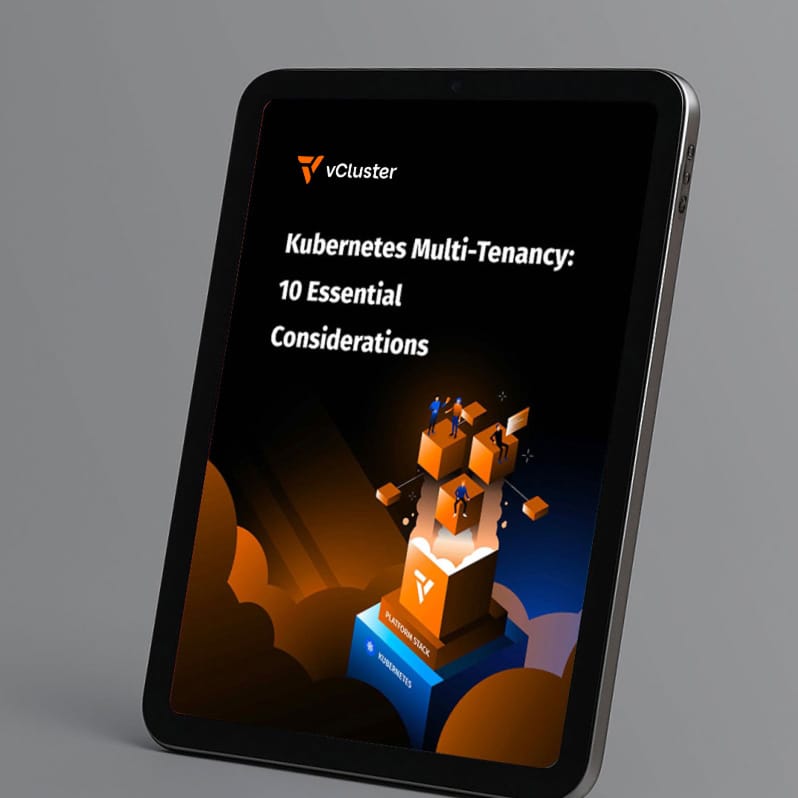
Kubernetes adoption has enabled enterprises to optimize resource usage, but securely sharing resources among multiple tenants remains a significant challenge. Multi-tenancy—where each user's workload and data are isolated from one another—is not offered by default in Kubernetes. This ebook addresses the critical challenges of achieving true cluster isolation, fair resource allocation, and enterprise-grade security. Discover how vCluster provides robust solutions to streamline multi-tenant architectures, enhance security through isolated virtual environments, and reduce operational costs by up to 70%. Whether you're managing development teams, securing production workloads, or implementing compliance requirements, this guide delivers 10 essential considerations to build effective Kubernetes multi-tenancy that balances efficiency with stability.
With this guide, you’ll learn:
- Understand Kubernetes multi-tenancy architecture and explore three different implementation approaches to optimize resource sharing while maintaining security and isolation.
- Master resource limits using ResourceQuota objects to prevent the "noisy neighbor" problem and ensure fair resource distribution across all tenants.
- Implement cost tracking and audit logging with tools like Prometheus, Kubecost, and Grafana to monitor infrastructure costs and identify security issues quickly.
- Secure your clusters with network policies and RBAC to control pod interactions, manage tenant access, and maintain compliance across namespaces.
- Deploy virtual clusters to overcome namespace limitations and provide tenants with full cluster-admin capabilities while maintaining strong isolation.
- Enhance security with Pod Security standards, usage metrics monitoring, secrets encryption at rest using HashiCorp Vault, and policy engines like Gatekeeper and Kyverno.
- Navigate common multi-tenancy questions including single-tenant vs multi-tenant trade-offs, namespace limitations, security risks, and implementation best practices.