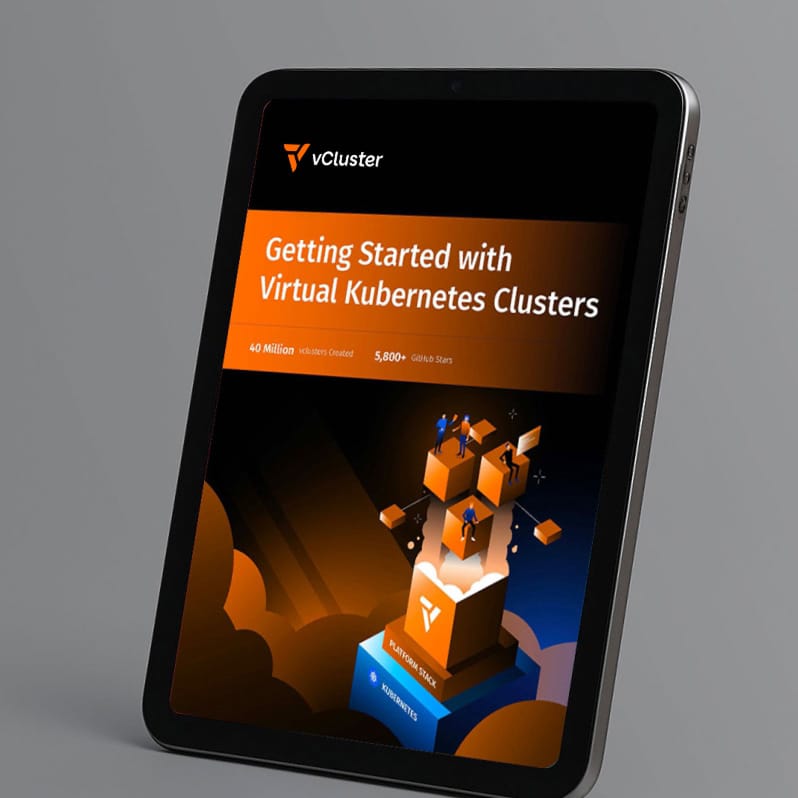
Experience True Kubernetes Virtualization Without Compromise
Traditional Kubernetes multi-tenancy forces teams into an impossible choice: use namespaces with weak isolation and restricted access, or deploy separate clusters with high costs and management overhead. Virtual clusters eliminate this trade-off entirely. This guide introduces vCluster, the open-source solution trusted by millions (40+ million vclusters created, 5,800+ GitHub stars) that delivers strong tenant isolation, flexible platform sharing, and vCluster admin-level autonomy at a fraction of the cost. Whether you're building self-service developer platforms, accelerating CI/CD pipelines, or offering managed Kubernetes services, virtual clusters provide the isolation of separate clusters with the efficiency of namespaces—enabling you to achieve up to 40% cost savings while empowering teams with true Kubernetes independence.
With this guide, you’ll learn:
- Understand vCluster architecture: a Kubernetes control plane running inside a namespace with API server, controller manager, and etcd syncing core resources between clusters.
- Compare namespaces vs. virtual clusters and discover why namespaces cannot contain cluster-scoped resources like nodes, persistent volumes, and storage classes.
- Explore why virtual clusters are the optimal solution: cheap cost, low overhead, flexible platform sharing, strong isolation, and vCluster admin autonomy.
- Achieve 40% cost savings through sleep mode and auto-delete features that identify idle namespaces, virtual clusters, and unused workloads to optimize resource costs.
- Deploy virtual clusters for pre-production self-service, ephemeral CI/CD testing, ISV offerings with dedicated clusters per customer, and managed Kubernetes services with best-in-class COGS.